

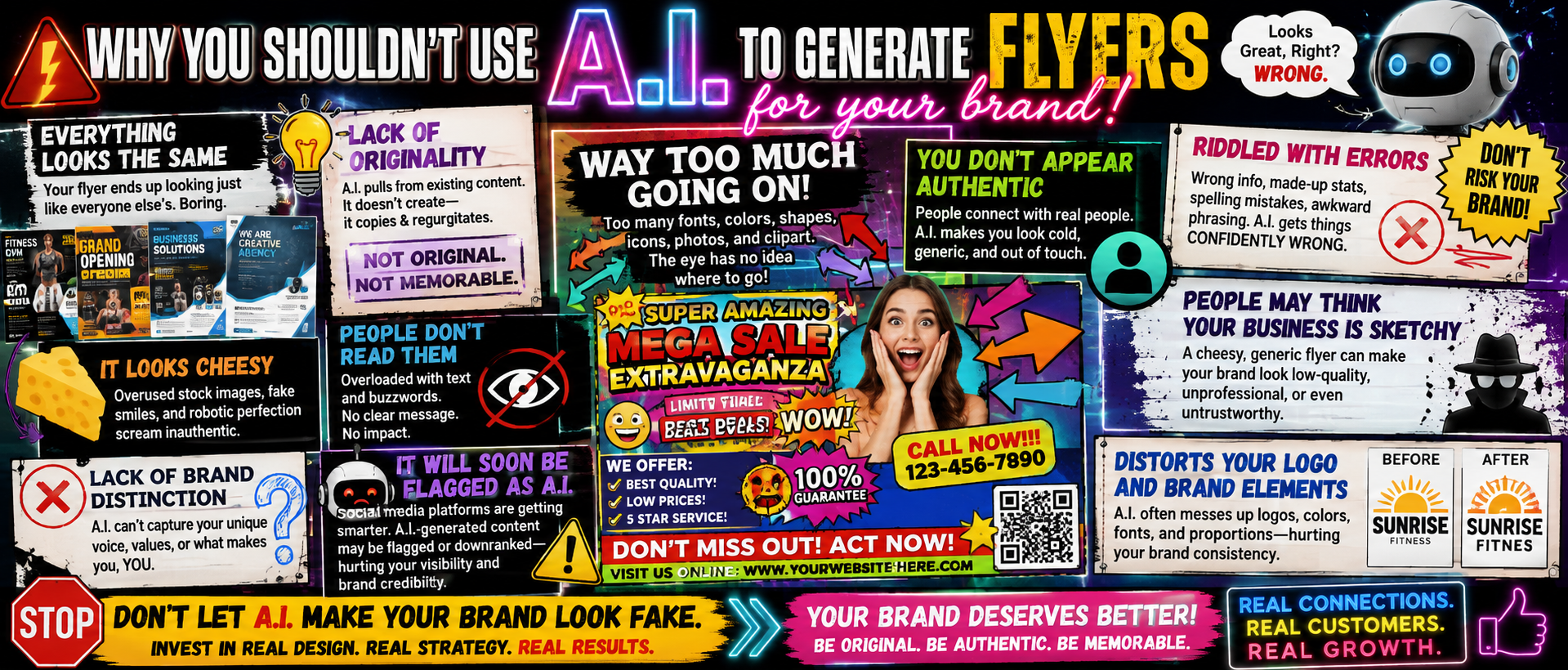
Look familiar? This one is a bit exaggerated, but at this point, we can all tell if a brand is using AI generated content.
Here’s the thing, you can use AI for marketing, but the better question is “Should you?”. AI is a powerful tool and many of you are seeing more and more people utilizing it for event flyers or social media graphics. We agree that it could be a fantastic tool for research and inspiration, but you should know that there are limitations to using AI tools that can create serious problems for your brand. Here’s why we advise against using ChatGPT or other AI tools without human, professional oversight for your marketing needs.
Everything Looks the Same
Doesn’t matter if you’re a small business, large business, florist, lawyer, realtor or veterinarian, your graphics will resemble every other business. AI can produce captions or text that sounds polished, but the graphics or content created will resemble other businesses and won’t set yours apart. Without proper editing or human oversight, your marketing may lack a distinctive voice or perspective. Overall, your originality is lost.
Errors in the Facts
The content produced by ChatGPT will sound confident, but it’s always best to doublecheck those facts.
Lack of Brand Distinction
ChatGPT and other AI resources do not understand what makes your company stand out. In fact, we’ve seen time and time again where businesses use ChatGPT to create advertising flyers or graphics for social media where their logos end up distorted. There’s also a social movement where customers are vowing publicly to boycott events that use ChatGPT to create their flyers, because they all look the same.
Risk to SEO
Search engines typically reward content that is helpful, accurate and demonstrates expertise. As a result, posting or publishing content generated by AI can hurt your overall SEO performance.
Copyright Concerns
Because ChatGPT is trained to pull information from vast amounts of data, you run the risk of accidentally plagiarizing another person’s work. When using AI resources, it’s often hard to determine if the content infringes on existing copyrighted material.